


The Band Web Site
News and Updates
Please note: The Band web site is no longer active. It is preserved on the web as an archive/museum, with no more updates.
[Updates 2001] [Updates 2002] [Updates 2003] [Updates 2004] [Updates 2005] [Updates 2006] [Updates 2007] [Updates 2008] [Updates 2009] [Updates 2010] [Updates 2011] [Updates 2012] [Updates 2013] [Updates 2014] [Updates 2015] [Updates 2016] [Updates 2017] [Updates 2018] [Updates 2019]
- Oct.06.2025
- The dinosaur awakens... One final(?) addition: A new list of tributes and songs about The Band
- March.19.2021
- "Where Do We Go From Here?"
- After 27 active years on-line, The Band web site will from now on no longer be updated. This also includes the interactive guestbook, that will be turned off today, exactly 25 years after it first opened on March 19, 1996. All the archived material at this site will be kept available on the internet. Thanks to all our contributors and to everyone involved in this project, that took us beyond our wildest dreams.
- Some final updates before we call it a day:
- Peter Viney's extensive review of the new Stage Fright 50th Anniversary Edition Box Set
- More photos downloaded from social media over the last month or so.
- Feb.10.2021
- Added more than 150 photos downloaded from social media over the last couple of months. Some highlights:
- Fascinating YouTube video:
"16-year-old Rick Danko (tall one in white shirt and black pants) at an end-of-summer dance in Mount Pleasant, Ontario in 1960. He played a few songs with his band as you can see him packing up his guitar at the end of the clip. This was right before Rick opened for Ronnie Hawkins at the Summer Gardens, which led to him joining the Hawks. The rest is history."
- NME, Feb 5, 2021: "The Band’s Robbie Robertson doesn’t mind Bob Dylan selling the rights to his songs"
- UDiscoverMusic, Feb 5, 2021: "The Band Share Royal Albert Hall Live Version Of ‘The Weight’ From Newly Expanded ‘Stage Fright’"
- Rolling Stone, Feb 4, 2021: "Robbie Robertson on How the Band Won Over Royal Albert Hall and Why ‘The Weight’ Is Safe With Bob Dylan "
- Robbie's new book Insomnia will be released in November 2021, by Penguin Random House.
- Some good Robbie interviews:
- 09/05/2019: Radio Q interview, Canada
- 11/19/2019: World Café interview, Philly
- 02/16/2020: Malcolm Gladwell’s Broken Record podcast
- 02/18/2020: Adam Carolla podcast
- 02/26/2020: Robbie Robertson on the TalkHouse podcast
- 03/22/2020: Canada Files
- 03/27/2020: Rolling Stone
- Jan.22.2021
- Wow. A new live track from the Stage Fright 50th Anniversary Edition Box Set is now available from YouTube. The Band in their prime, in full flight:
- Jan.13.2021
- "Howard Johnson, Tuba Man With The Band, Taj Mahal, Dies"
- "Why Some Hear 'The Night They Drove Old Dixie Down' As A Neo-Confederate Anthem" -- podcast from New York Public Radio
- New mixes from the Stage Fright 50th Anniversary Edition Box Set are now available from YouTube:
- Jan.02.2021
- The release date for the Stage Fright 50th Anniversary Edition Box Set has been set to February 12th, 2021. The box includes new mixes of the original tracks by Bob Clearmountain, presented in original planned sequence, an unreleased Live at Royal Albert Hall 1971 concert, unearthed field recordings, alternate mixes, Blu-Ray audio discs with 5.1 surround sound and hi-res audio, and more.
- The remixed tracks on the new Stage Fright box set are also available as a two-CD version and as 33rpm LPs in split-color or black vinyl.
- Some recent articles about the upcoming 50th Anniversary Edition
of The Band's third album, Stage Fright:
- "The Band Announce 50th-Anniversary Edition of ‘Stage Fright’ " (Rolling Stone)
- "The Band’s Classic ‘Stage Fright’ Gets 50th Anniversary Deluxe Treatment" (American Songwriter)
- "The Band’s ‘Stage Fright’ Expanded in 50th Anniversary Box Set" (ultimateclassicrock.com)
- "The Band’s Classic ‘Stage Fright’ Album to Get 50th Anniversary Deluxe Reissue" (Variety)
- "The Band ‘Stage Fright’ 50th Anniversary Box Set Includes Previously Unreleased Live Album" (jambase.com)
- Dec.10.2020
- Looks like the 50th Anniversary Edition
of The Band's third album, Stage Fright, has been postponed until February 2021:
- Here are some cover art and a short review of the box set.
- You may also want to dress up for the release date...
- Twenty-one years ago today, on December 10, 1999, one of the sweetest souls of rock'n'roll left us. Read Carol Caffin's tribute "The Flame Still Burns: A Dedication to Rick".
- Dec.09.2020
- Added nearly 200 photos downloaded from social media over the last couple of months.
- "Bob Dylan sells entire song catalog to Universal Music" (CNBC, 07.12.2020)
- "What Bob Dylan Selling His Music Catalog Does and Doesn’t Mean" (Rolling Stone, 07.12.2020)
- "Wait, Bob Dylan Owned ‘The Weight’? An Explainer" (Rolling Stone, 08.12.2020)
- "Revisiting The Band's 'The Last Waltz', the greatest farewell show of all time" (Far Out, 11.25.2020)
- "Go Behind the Scenes of 'The Last Waltz'" (Rolling Stone, 11.25.2020)
- Check out these 2020 photos from the spot where the group photo for Music from Big Pink was taken 52 years ago! Thanks to Todd Atkinson and Brandon Remler for the contribution.
- Oct.25.2020
- Is this the first photo ever of the original quintet performing as "The Band"?
- Oct.04.2020
- Added 400+ photos downloaded from social media this autumn.
- Sep.17.2020
- Another new article from New Musical Express, published yesterday:
- Sep.09.2020
- Published in British music mag. New Musical Express this week:
- Sep.08.2020
- Published yesterday in Canada's leading(?) newspaper The Globe and Mail:
"Author of a new Levon Helm bio: 'If he felt you screwed him, that was the end'".
- Sep.07.2020
- Connell Miller has published two Levon & the Hawks tracks on YouTube, recorded live in January 1965:
Miller posted the following on FaceBook about the recordings:
"In January of 1965, Dayton Stratton called (I was in Oklahoma and no longer living in Fayetteville) to tell me that Levon (now as 'Levon and the Hawks') would be playing that weekend at the Fondalite Club in Tulsa. I lugged my 47-lb. Wollansak tape recorder up to the club where I -- even with Bill Avis' help -- was, unfortunately, not able to set my two mics up in a good position (not very good quality because of that, which gave me the inclusion of lots of crowd noise and 'clinking' of glasses, plus there's been some degradation of the 55-year-old tape itself). It is what it is, but at least I came away with 18 songs of the most arranged and rehearsed, killer bar band on the planet! Still a few months away from hooking up with Dylan and three years from their shedding the 'bar band' tag with their (Inter)national debut as The Band."
- New article from Rolling Stone: "Flashback: Bob Dylan Guests at 1983 Rick Danko/Levon Helm Club Gig".
- Aug.26.2020
- The Band ~ Warner Brothers agreement ~ copy ~ 1977 -- the six-album contract that fell through.
- An interesting article appeared in the Dutch newspaper deVolksrant last week:
Robbie Robertson Interview: "I've always looked for some kind of brotherhood"
This interview was published in connection with the cinematic premiere in Europe of Once Were Brothers: The Story of Robbie Robertson and The Band. A few quotes from the article:- "[Levon Helm and myself] never really reconciled. But I visited him when he was sick. When I arrived, he was already unconscious."
- "I know they tried, twice, with a whole film crew to get [Garth Hudson] to give his side of the story, but his health wouldn't allow it. You have to maintain some respect for a person, otherwise it wouldn't accurately portray him."
- If not for corona, then [Robertson and Martin Scorsese] would now have been finishing Killers of the Flower Moon, Scorcese's most recent movie.
- ...the second part of [Robertson's] autobiography... should be done at the end of this year.
- ...[Robertson] will have a Zoom meeting with a scenario writer about a future film on The Band. "No documentary but drama. I really hope I still get to see its release."
Thanks to Imar Koutchoukali for translating the interview for us.
- An interesting article appeared in the Dutch newspaper deVolksrant last week:
- Aug.23.2020
- Available on YouTube -- The Band live, September 14, 1974 Wembley Stadium, London -- the whole concert in acceptable audio and video quality.
- Aug.22.2020
- The Weight Band released two live albums this summer, with loads of lovely covers of Band songs: Live is a Carnival and Live in Japan.
- Aug.21.2020
- "‘Levon’ Review: The Beating Heart of the Band" (The Wall Street Journal)
- Aug.17.2020
- New article by Doug Collette in Glide Magazine: "50 Years Later: Revisiting The Band’s ‘Stage Fright’".
- "Now It's The Toronto Sound" (PDF-scan of an article in The Windsor Star, September 1969). Downloaded from Dag B.'s The Band FaceBook group.
- Here's a well-written article from 2017(!), discussing the "political correctness" of The Band's "The Night They Drove Old Dixie Down": "Unpacking the Absurd Logic of Cultural Appropriation -- and What It Will Cost Us" (observer.com) Thanks to Faroese(!) author Høgni av Heiði for sending us the link.
- Lenghty and interesting podcast about the new book on Levon Helm (scroll down to "Episode 74" to listen to the interview): "Author Sandra B. Tooze: "Levon: From Down in the Delta to the Birth of The Band and Beyond". Link provided by our friend Rudy V. (who has been following this site since it's humble start 25+ years ago!)
- Aug.14.2020
- "The Band's Discontented Third LP, 1970's 'Stage Fright', Represented a World Braving Calamity" (popmatters.com)
- Aug.13.2020
- The current political situation has stirred up a discussion about The Band's "The Night They Drove Old Dixie Down". Here are some articles/comments:
- "Marcus King and Friends Give 'The Last Waltz' a Timely Update" (Rolling Stone)
- "Can 'The Night They Drove Old Dixie Down' Be Redeemed?" (Rolling Stone)
- "'The Night They Drove Old Dixie Down' Needs No Redemption" (SavingContryMusic.com)
- "A Vehicle for a Harmful, Racist Myth?" (Pat Brennan, The Band guestbook)
- "The Troublesome Case of 'The Night They Drove Old Dixie Down'" (Slate)
- Aug.02.2020
![[photo]](band_pictures/garth_hudson_at_piano_2001_do_small_tag.jpg)
It's Garth Hudson's 83rd birthday today! We send our best wishes to Garth and Sister Maud Hudson.
- Jul.26.2020
- We're looking forward to this one:
The Band's '70s road manager and long-time collaborator with everyone-and-his-uncle in rock'n'roll and the film industry, Jonathan Taplin, will be releasing his memoirs titled The Magic Years : Scenes from a Rock-and-Roll Life in March 2021. Available for pre-order from Amazon.
- Jul.17.2020
- Added 200 photos downloaded from social media this spring/summer.
- Jul.08.2020
- Recently published on YouTube: Concert for Hospice 1990 -- 27-minute long concert video with Levon Helm, Jim Weider and The Cate Brothers Band, from a benefit gig for the Arkansas hospital that nursed Levon's mother Nell:
- Jul.05.2020
- Happy 77th, Robbie Robertson!
- Jul.03.2020
- This week, Rolling Stone published a
"50 Greatest Bassists of All Time"-list. Rick Danko,
#20
on the list, is quoted saying:
"I feel about bass playing as I do about background singing. It's nice to leave the top of the beat for the vocal and spread the other parts around the beat. That gives the music a sort of Ferris-wheel effect and carries it along."
- This one had gone under our radar:
Rick Danko guested on one track on Norwegian(!) band Green Cortinas' 1995 album Sleep. The track with Danko is available on YouTube, well worth a listen:
- Jul.01.2020
- From Rolling Stone 06.30.2020:
"Robbie Robertson Explains Why He Turned Down Playing on Bob Dylan's New Album"
- Jun.28.2020
- New 40-minute long audio interview published by Rolling Stone yesterday:
"Robbie Robertson Looks Back on the Band" -- "Robertson discusses his fraught relationship with Levon Helm, whether the group's story was a triumph or tragedy, their work with Bob Dylan, and much more."
- Jun.22.2020
- Both Rick Danko and Garth Hudson appear on Eric Andersen's new 3-CD set Woodstock Under the Stars.
- Jun.20.2020
- The first French book on The Band is here, Bertrand Bouard's The Band!
- Jun.12.2020
- A bit of a surprise in the British newspaper the Daily Mail yesterday: A new, lengthy and rather tabloid article about Levon Helm, with loads of illustrations, titled:
"Levon Helm 'Couldn't Take' Playing with Bob Dylan Due to Clashing over Their Different Sounds".
The article was spawned by the upcoming release of Sandra B. Tooze's biography Levon: From Down in the Delta to the Birth of The Band and Beyond. If you read this article, it is worth noting what Wikipedia has to say about the Daily Mail:
"In February 2017, the Daily Mail became the first source to be deprecated as an 'unreliable source' to use as a reference on the English Wikipedia. Its use as a reference is now 'generally prohibited, especially when other more reliable sources exist'. Support for the ban centred on 'the Daily Mail's reputation for poor fact checking, sensationalism, and flat-out fabrication'."
- Jun.9.2020
- Just announced:
"Levon 80": Levon Helm Studios Present a Newport Folk Revival A live webcast event benefiting Levon Helm Studios & Newport Festivals Foundation:
THU. JUNE 18, 2020, 8:30PM ET
Featuring The Midnight Ramble Band with very special guests to be announced!
HD Webcast $19.99, order here - Sandra Sandra B. Tooze's new biography Levon: From Down in the Delta to the Birth of The Band and Beyond will be released after the summer. The reviews are already starting to come in from magazines, blogs and book sites:
- Jun.7.2020
- "Robbie Robertson's Last Waltz: The Amazing Adventures of Toronto's Greatest Songwriter" -- this extensive article/interview from Toronto Life magazine, first published in October 2019, is now available on-line.
- May.26.2020
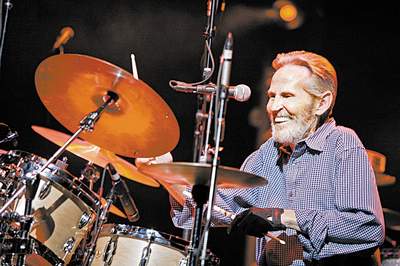
- Our dear and deeply missed Levon, the greatest singing drummer in the history of rock'n'roll, should've been 80 today.
- May.24.2020
- "Hear Neil Young's 'Try' with Emmylou Harris and Levon Helm" -- from Young's upcoming archival Homegrown album release.
- May.23.2020
- Rick Danko's brother Terry posts many lovely and often previously unpublished photos on Facebook, from his and Rick's life and musical careers. We particularly fell for this one from their tour in Japan in the late '70s: Rick photobombing in Kyoto.
- "'Levon didn't write songs. I gave him credit': Robbie Robertson on The Band's disputes and new film" -- new interview from salon.com.
- May.20.2020
- New entry for 1987-89 added to the phenomenal Dag B. collection
- May.16.2020
- Lovely find on Facebook: Photo of Garth Hudson as a choirboy in the '40s
- May.01.2020
- The legendary Peter Viney has now written the definitive(?) review of the new The Band/Robbie documentary Once Were Brothers, exclusively for The Band web site!
- Apr.27.2020
- Apr.20.2020
- From jambase.com yesterday: "Remembering Levon Helm: The Band Appears On 'The Road' Television Series"
- Apr.19.2020
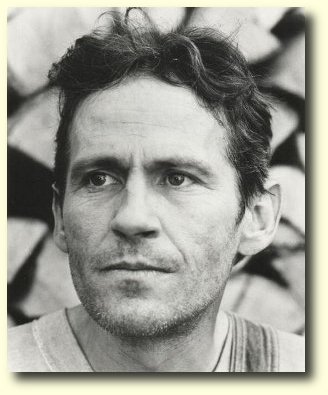
Levon Helm, May 26, 1940 -- Apr 19, 2012
Eight years gone
The music will live forever- Apr.15.2020
- Neil Young's "lost album" from the mid-70s, Homegrown, is scheduled to finally be made available on June 20, 2020, according to Wikipedia and several other sources. The album will include "White Line," a previously unreleased track recorded in England in September 1974 as an acoustic duet with The Band's Robbie Robertson. The recording was done a few days before Crosby, Stills, Nash and Young's Wembley show, where The Band was one of the opening acts. Levon Helm also appears on Homegrown, playing drums on "The Old Homestead". This track was recorded in December 1974 at Quadraphonic Sound Studios in Nashville, and later released on 1980's Hawks and Doves.
- Apr.12.2020
- Added 175 photos downloaded from social media this winter.
- Recent article from the Arkansas Democrat-Gazette: "Review: Take a load off, Robbie"
- Apr.01.2020
- This 1983 video, posted on Facebook recently, was new to us: Richard, Garth and Rick, with Blondie Chaplin and Paul Butterfield, performing "The Shape I'm in". From a short-lived NBC TV series titled Rock'n'Roll Tonite.
- Mar.28.2020
- Published by Rolling Stone yesterday:
"Robbie Robertson on the Power of 'The Weight' During the Pandemic: The Band's 1968 classic has found a new audience in the wake of the coronavirus, thanks to a globe-spanning cover. 'It's good medicine,' says Robertson."
- Mar.05.2020

From Rolling Stone: "Robbie Robertson, Warren Haynes Lead New Orleans 'Last Waltz' Tribute Concert "
- Mar.04.2020
- News from jambase.com: "The Band's Robbie Robertson To Perform At The Last Waltz New Orleans All-Star Concert"
- Feb.26.2020
- "Survivors Get to Tell the History, but Robbie Robertson is Pushing It" (San Francisco Chronicle)
- "Robbie Robertson on Heart-Wrenching The Band Doc 'Once Were Brothers'" (48 Hills)
- Feb.25.2020
- Here is a message from our dear old friend and legendary rock photographer Elliott Landy:
Kickstarter - New THE BAND book by Elliott Landy: "Contacting The Band"
![[photo]](band_pictures/contacting_the_band.jpg)
As generous supporters of my previous book The Band Photographs, 1968-1969, which became the highest funded photography book in Kickstarter history at that time, I wanted to personally thank you once again and invite you to view my new Kickstarter campaign created to introduce my latest photography book on THE BAND which I have titled "Contacting THE BAND". It will feature enlarged (therefore easy to see,) selected contact sheets of the photos I took of THE BAND for their first two albums, Music From Big Pink and The Band, specifically designed to give you a unique behind-the-scenes look at the process and frame by frame progression of these landmark photo shoots, including personal sessions with the guys at home and on the road.
This book will be the same page size (12x12 inches), at least 128 pages, beautifully printed, and specifically designed to fit perfectly alongside my earlier book on your bookshelf or coffee table.
You will find some great new rewards offered in this Kickstarter campaign including prints of my most well liked images available at a large discount. In addition, there are still some copies of the first edition of The Band Photographs book available in the Rewards section, but they are running low and I don't expect to be able to reprint it with the same quality -- sad to say.
So, thank you for your support and good will. I appreciate it and knowing that my works will be enjoyed is an inspiration to do more. Please take a look at my new book Contacting The Band at Kickstarter campaign.
- From UK magazine The Big Issue: Robbie Robertson: "My teenage self wouldn`t believe the life I`ve had"
- Feb.25.2020
- From UK magazine The Big Issue: Robbie Robertson: "My teenage self wouldn`t believe the life I`ve had"
- Feb.23.2020
- We received this message from a dear old friend a few days ago:
"It is with sadness that I inform you of the passing of Bruce Bruno, a former sometime singer with Hawkins and the Hawks. He passed on Feb. 19, 2020, after a long illness. Bruce continued to remain a friend of Levon's up until Levon's passing."
- Feb.21.2020
- "More music from Big Pink: The Weight Band plans to release songs recorded there"
- The 2019 documentary Once Were Brothers: Robbie
Robertson and The Band is now beeing screened at selected
movie theatres in North America. Here are a few recent reviews/articles:
- "'Once Were Brothers' Review: Robbie Robertson Looks Back in Anger, Joy, Sentimentality" (Rolling Stone)
- "'Once Were Brothers: Robbie Robertson and the Band' documents a dream gone up in smoke" (Los Angeles Times)
- "'Once Were Brothers' Review: They Shall Be Released (Again)" (The New York Times)
- "Dylan, Drugs and Rock 'N' Roll: Five Revelations From 'Once Were Brothers: Robbie Robertson and The Band'" (Billboard)
- "The New Documentary About the Band Makes the Same Mistake as the Last One" (Slate Magazine)
- "The Band's Robbie Robertson on his adventures with Dylan, Dali, Warhol and Scorsese" (New York Post)
- "'Once Were Brothers: Robbie Robertson and The Band' Proves Confessional & Endearing" (Glide Magazine)
- Feb.20.2020
- Please consider contributing to the funding of Elliott Landy's new book project: Kickstarter Campaign for "Contacting The Band"
- New interview from Paste Magazine: "Robbie Robertson: The Songwriter as Filmmaker"
- Feb.18.2020
- New article/video interview published in Rolling Stone yesterday: "The First Time: Robbie Robertson" -- "The former Band guitarist discusses meeting Bob Dylan, Eric Clapton, and Martin Scorsese, as well as playing Woodstock and realizing 'The Weight' was a hit".
- Feb.05.2020
- From the Poughkeepsie Journal: "Levon Helm: Mountain Jam to feature 80th birthday celebration for Woodstock drummer"
- Feb.02.2020
- New article by Doug Collette in Glide magazine: "I Was there when: The Band Fell Flat at Saratoga Performing Arts Center (well, sort of...)"
- Jan.27.2020
- Jan.25.2020
- 300(!) images of Robbie Robertson on Pinterest.
- Jan.20.2020
- Check out this new podcast: "The Band: A History". Thanks to Craig McCoy for sending us the link.
- Jan.17.2020
- "The Band Documentary 'Once Were Brothers' Coming To Theaters"
- 'Once Were Brothers: Robbie Robertson and The Band' - Official Trailer
- Jan.07.2020
- New entry for 1964-67 added to the phenomenal Dag B. collection.
- Jan.02.2020
- Sad news this morning:
Marty Grebb died yesterday, after posting a farewell message on his Facebook account. Grebb had a long history of working with The Band. He was a member of Rick Dankos '70s touring band, he
contributed to The Band's Jericho (1993)
and Jubilation (1998) albums, and he played in
The Weight Band (featuring former members and collaborators of The Band). He was a member of Bonnie Raitt's band for 25 years, and also worked with Chicago,
Leon Russell, Elton John and Muddy Waters. May you rest in peace, Marty Grebb.
/arc-anglerfish-arc2-prod-dmn.s3.amazonaws.com/public/P3ZKUUUFBFQRMA3FHNVP5G4VBA.jpg)
Marty Grebb (right) with The Weight band, 2015
[History] [Members] [Library] [Discography] [Videography] [Filmography] [Pictures] [Audio Files] [Video Clips] [Tape Archive] [Concerts] [Related Artists] [Merchandise] [Guestbook] [Chat Room] [Search] [What's New?] [Main Page] Webmaster - From UK magazine The Big Issue: Robbie Robertson: "My teenage self wouldn`t believe the life I`ve had"


